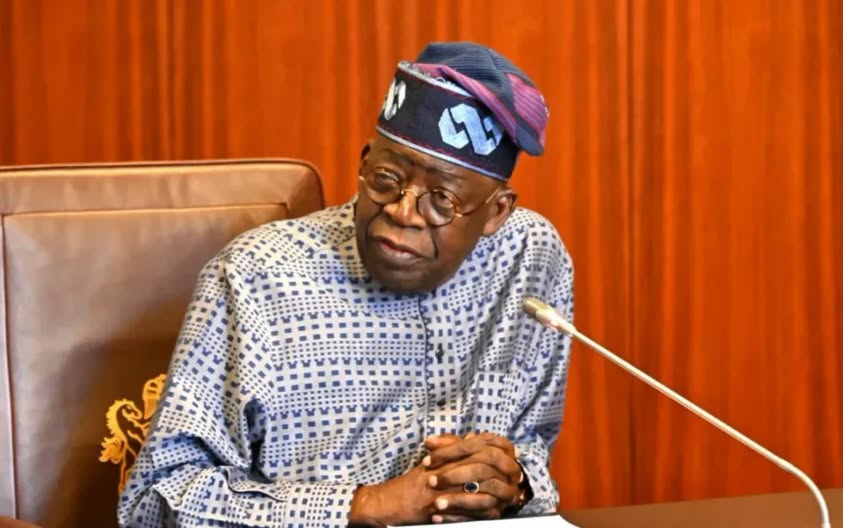
President Bola Tinubu has ruled out any return of the fuel subsidy, telling supporters at the All Progressives Congress (APC) presidential campaign rally in Dutse, Jigawa State, on Tuesday, November 10, 2026, that the policy “is not going to come back” and that his administration will instead channel public money into farming, education and infrastructure.
The President used the rally at Dutse Township Stadium, part of the APC’s nationwide campaign ahead of the 2027 general election, to draw a firm line under one of the most debated questions in Nigerian politics: whether a future government should restore the petrol subsidy he removed on his first day in office.
“To those who say subsidy is coming back, it’s a lie. Don’t let them lie to you again. It’s not going to come back. We cannot spend the future of our children today and feel that they will grow tomorrow. No, they have to be in school. We have to invest in their education. We have to invest in agriculture,” Tinubu said.
“Subsidy is not coming back”
Tinubu framed the subsidy debate as a choice between the past and the future. He argued that the money once spent on subsidising petrol should be directed to sectors that build lasting prosperity, and he warned supporters not to believe politicians promising a return to the old system.
“Those who think they should bring subsidy back, they are liars. How will you pay for those commitments? How will you repair the roads? How will you maintain them? How will you function?” he asked the crowd.
The President said the removal of the subsidy had created economic opportunities for workers and suppliers, including labourers, granite suppliers and rock suppliers, who he said were “eating and surviving” from the infrastructure work now under way.
His remarks were aimed directly at the opposition. Tinubu cautioned residents of Jigawa against being swayed by opposition candidates who have promised to reverse the removal of the fuel subsidy, saying such a move would undo the gains of his administration.
The subsidy question has become a central dividing line ahead of the 2027 election. Former Vice-President and African Democratic Congress (ADC) presidential candidate Atiku Abubakar has reiterated his commitment to restoring the petrol subsidy if elected president in 2027, setting up a direct clash with Tinubu’s position.
Interest-free loans and six mechanised farming centres
In place of the fuel subsidy, Tinubu promised a package of support for farmers, including interest-free loans for small-scale farmers and mechanised farming service centres in six locations across the country.
“We will subsidise farming. We will reward small-scale farmers. Interest-free loans for farmers are coming. Prosperity is coming. Food security will happen. I hope you hear me, Jigawa. You hear me, Jigawa. There will be interest-free loans for small-scale farmers. We are going to install a mechanised farming service centre in six geographical locations: mechanised farming,” he said.
The President also said universities would play a greater role in agricultural research and development than ever before, linking higher education directly to the effort to grow more food at home.
“Our university will be more involved in research and development in agriculture than ever before,” Tinubu said. “We have the arable land, we have the commitment, we have the people. We can feed ourselves and we will bring food prices down to the minimum.”
He promised action on agriculture, mechanisation, irrigation and additional value for arable land, and said food prices would fall as domestic production rises. For a country where food inflation has squeezed household budgets for years, the pledge to bring food prices down to the minimum will be measured against what families actually pay in the markets.
The farming promises build on the administration’s wider agricultural push, which has included support for commercial farming in tertiary institutions. The Federal Government recently offered 40 tertiary institutions up to N2 billion each for commercial farming, a programme that connects campuses directly to food production.
NELFUND described as a weapon against poverty
Tinubu also defended the Nigerian Education Loan Fund (NELFUND), the student loan scheme his administration established, describing it as a weapon against poverty that will not be stopped.
“We are taking away the problem of the education of their children by establishing NELFUND. It is a weapon against poverty. Are you with me? NELFUND is a weapon against poverty. And we will continue in that direction. We will continue,” he said.
The President disclosed that money recovered from irregularities by the Economic and Financial Crimes Commission (EFCC) is now directed to NELFUND to educate Nigerian children, linking the anti-corruption drive directly to funding for students.
“Every money recovered from irregularities by the EFCC is now directed to NELFUND to educate our children,” Tinubu said.
He said the removal of the subsidy had eased the financial burden of educating children for workers and suppliers, while NELFUND was helping families meet the cost of schooling.
“We will conquer insecurity”
The President also addressed insecurity, acknowledging the security worries of his audience in Jigawa and across the North-West, a region that has borne the brunt of banditry and insurgency.
“We will conquer insecurity. We’ve been through many wars; we will defeat our enemies, enemies of unity, enemies of stability, and enemies of hope. To assure you that we are doing that, we’ve strengthened the police, we’ve strengthened the armed forces, and we are paying better salaries today,” he said.
Tinubu urged residents to collaborate with security agencies in the fight against banditry and insurgency, asking them to see neighbours as friends and partners and to report anything they know about insecurity immediately.
“But working together, see your neighbour as your friend and partner. See the individual, exchange information. Anything you know about insecurity, report it immediately. I promise you, we are working hard to ensure that Nigeria is safe and our forces are well taken care of, housing, reward, regardless of where they come from. We will conquer insecurity,” he said.
He said his administration would prioritise the procurement of ammunition and improved welfare for members of the Armed Forces, and he thanked the people of Jigawa State for their continued support for the APC through consistent electoral victories.
Roads, infrastructure and the 2027 campaign
Tinubu told the rally that the infrastructure work under way across the country showed what the subsidy savings were being spent on, pointing to road construction as visible evidence.
“On the roads, you are seeing what we are doing. Thank you. On the roads, you are seeing what we are doing across the country. No region is left behind,” he said.
At the rally, the President formally presented the party’s manifesto and roadmap to prosperity, which he described as the APC’s plan for the years ahead.
The Director-General of the APC Presidential Campaign Council, Senator Abdulaziz Yari, told the rally that Tinubu’s role in the struggle against military dictatorship, his performance as a former governor and his support for previous civilian presidents from Northern Nigeria had earned him the region’s goodwill.
Yari dismissed claims by opponents that Tinubu would not be welcomed in Northern Nigeria, saying the crowd in Dutse showed otherwise. He challenged those calling themselves core Northerners to match Tinubu’s record of supporting candidates who went on to win elections at every level, from councillor to president.
The rally in Dutse is part of the APC’s nationwide campaign as Tinubu seeks re-election in 2027, with the party taking its message directly to voters in the North-West.
What it means for Nsukka and Enugu
The farming promises made in Dutse carry direct meaning for the Nsukka zone and Enugu State, where farming remains the mainstay of most households. Interest-free loans for small-scale farmers and mechanised farming service centres would matter most in communities where families still till the soil by hand and struggle to afford inputs, tractors and irrigation.
If the six mechanised farming service centres are spread across the country, farming communities in the South-East will be watching to see whether one of them serves their region, and whether smallholders in places like Nsukka, Udenu and Igbo-Eze can actually access the loans and machinery on offer.
The pledge to involve universities more deeply in agricultural research and development also touches the University of Nigeria, Nsukka, one of the country’s leading agricultural research institutions. The university was recently named among six institutions to host a new $1.5 million research chair in green energy production and geoenvironmental engineering, showing that its research capacity is already attracting national investment.
For Enugu families, the promise to bring food prices down to the minimum is the measure that will be felt most directly. Food prices determine what households can afford each week, and any genuine fall in the cost of staples would ease pressure on families across the state.
The NELFUND pledge also matters locally. Students from Enugu State are among the beneficiaries of the student loan scheme, and the President’s statement that EFCC recoveries are being channelled into the fund gives the scheme a funding source that does not depend on annual budget releases alone.
The subsidy debate so far
Tinubu announced the removal of the fuel subsidy on May 29, 2023, in his inaugural address as President, declaring that “fuel subsidy is gone.” The decision ended decades of government spending on subsidising petrol prices, but it also pushed pump prices sharply higher and fed into the cost of transport and food.
Since then, the subsidy has remained one of the most contested issues in Nigerian public life. Supporters of the removal argue that the money saved is being invested in infrastructure, education and agriculture. Critics argue that the savings have not translated into relief for ordinary Nigerians, and some opposition figures have promised to bring the subsidy back.
The debate sharpened in recent days. Peter Obi, the Labour Party’s 2023 presidential candidate, challenged Tinubu to account for ₦15.8 trillion in subsidy savings and over $100 billion borrowed, arguing that Nigerians deserved a full account of what the removal had delivered.
Tinubu’s remarks in Dutse are his firmest answer yet to that challenge and to the opposition’s promise of restoration: the subsidy is not returning, and the government will instead subsidise farming, support students through NELFUND and invest in roads and infrastructure.
Whether the farming loans, mechanised centres and lower food prices he promised materialise will be tested in the months ahead, as the 2027 campaign gathers pace and voters weigh the President’s record against the opposition’s offer.