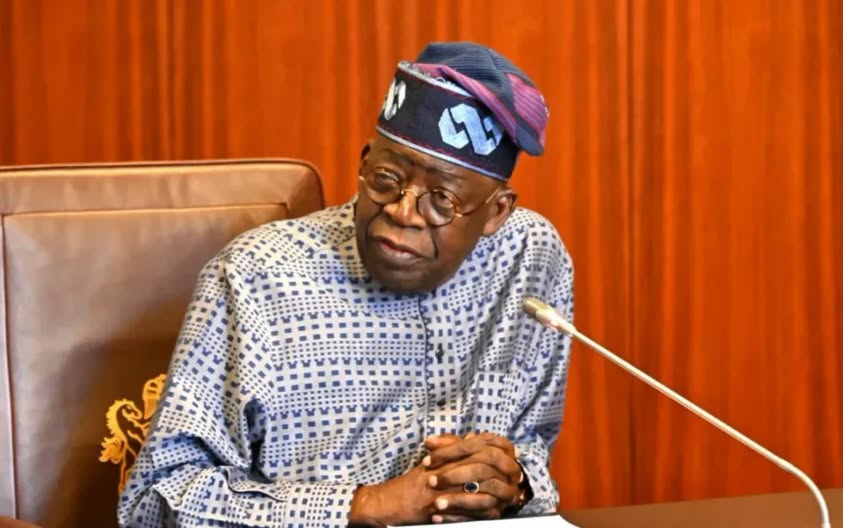
Peter Obi, the presidential candidate of the Nigeria Democratic Congress (NDC), has challenged President Bola Tinubu to explain what his administration has done with the estimated ₦15.8 trillion saved from the removal of the petrol subsidy and the more than $100 billion he said the government has borrowed since it came into office.
Obi issued the challenge in an open letter posted on his X handle on Saturday, November 7, 2026, titled “Good Day, Mr President: Nigerians Deserve Accountability”. The letter followed Tinubu’s overnight stay in Akwa Ibom State on Friday, a visit Obi noted with congratulations because it took the President to a Nigerian state outside Lagos and Abuja.
In the letter, Obi asked the President to travel to the remaining 33 states of the federation, spend time with ordinary Nigerians, and explain what the resources available to his government have delivered in their lives. He listed the subsidy savings, the borrowings, increased tax revenues and additional government revenues which the administration celebrated last year as having surpassed its target.
What Obi asked the President to explain
Obi’s central demand was direct. He asked the President to explain what the administration has done with the ₦15.8 trillion saved from the removal of fuel subsidy, the over $100 billion borrowed, the increased revenues from taxing Nigerians, and the additional revenues the government said exceeded its target.
He then tied the figures to measurable results that Nigerians can see in their daily lives. He asked how many Nigerians have been lifted out of poverty since the administration came into office, how many out-of-school children have been returned to school, and how many functional primary healthcare centres have been built across the country.
Obi also asked for an account of improvements in electricity supply and security, two areas where many Nigerians say they have felt little relief despite the scale of public resources the government has handled. His argument, in essence, is that the size of the money should be visible in the quality of life: if trillions have been saved and billions borrowed, the evidence should show in cheaper food, working schools, staffed hospitals, steadier power and safer roads.
The letter did not offer an alternative accounting of the funds. It challenged the President to publish explanations and measurable results, so that Nigerians can judge for themselves whether the resources have been well used.
The visit to Akwa Ibom that prompted the letter
Obi’s letter came a day after Tinubu visited Akwa Ibom State, where he attended an All Progressives Congress (APC) campaign rally. During the rally, Tinubu took a swipe at Obi, including criticism of the former Anambra State governor over the gully erosion menace in Anambra State.
Obi responded by congratulating the President on spending a night in a state outside Lagos and Abuja, and urging him to extend such visits to the remaining 33 states. The point of the congratulations was pointed: a president who travels the country, Obi suggested, would see for himself the conditions in which Nigerians live, and would then be better placed to explain what the government’s resources have achieved.
The exchange is part of a wider contest ahead of Nigeria’s next presidential election, scheduled for January 16, 2027, according to reports. Obi is the presidential candidate of the NDC, with Senator Rabiu Musa Kwankwaso as his running mate. Tinubu is seeking re-election on the platform of the APC.
The ₦15.8 trillion figure and what the government has said about it
The ₦15.8 trillion figure has featured in the Federal Government’s own account of its economic reforms, although its meaning needs context. According to the Federal Ministry of Finance, in a briefing on the government’s economic reforms in August 2026, subsidy savings mobilised ₦15.8 trillion for the Federation between June 2023 and December 2025.
The ministry’s figures, as reported, show that the money was not held in a single federal account. The Federal Government received approximately ₦5.43 trillion, while state governments received about ₦6.52 trillion and local governments received about ₦3.88 trillion. The savings were shared through the Federation Account, which means every state, including Enugu State, received a share of the money.
The ministry also explained that the Federal Government’s additional resources in the period included about ₦3.12 trillion in other incremental revenues and about ₦11.85 trillion in incremental borrowing, bringing the total to approximately ₦20.4 trillion. It said additional expenditure pressures during the same period amounted to approximately ₦30.64 trillion, covering wage adjustments, external debt servicing, infrastructure, electricity support and other obligations.
That breakdown matters for Obi’s question. His letter asks what the resources achieved for ordinary Nigerians, and the ministry’s figures provide one frame for answering it. The figures describe public resources across different levels of government, so any fair accounting must separate what the Federal Government held from what went to the states and local governments, and must weigh the inflows against the spending pressures the ministry listed.
For readers in Enugu State, the state share is the most direct part of the story. Enugu was among the states that received part of the ₦6.52 trillion distributed to state governments, and the question Obi raises applies at that level too: what did the additional Federation Account money deliver in the state, in roads, schools, hospitals and power? That is a question for both the Federal Government and the state governments that shared the savings, and it is one this newspaper will keep asking.
The NDC’s response to Tinubu’s criticism
The NDC also responded separately to Tinubu’s criticism of Obi over the gully erosion problem in Anambra State. In a statement issued by the National Presidential Campaign Council spokesperson, Dr Chiogo Constance Ikokwu, the party accused the Tinubu administration of eroding Nigeria’s commonwealth through excessive borrowing, poor fiscal management and inadequate investment in critical public services.
The party said Obi and Kwankwaso would reverse the trend if elected in 2027. It also pointed to Obi’s record as governor of Anambra State, claiming he left the equivalent of $500 million in investments and local and foreign currency assets when he handed over in 2014, including $156 million in dollar-denominated bonds.
That claim is the NDC’s account of Obi’s record, and it has been contested by his critics in the past. What is not in dispute is that the contest over the economy has become the central argument of the 2027 race: the government says its reforms, including subsidy removal, have freed resources and stabilised the economy, while the opposition says the resources have not translated into visible improvements in the lives of Nigerians.
Why the subsidy question will not go away
Tinubu announced the removal of the petrol subsidy during his inauguration on May 29, 2023. The policy was followed by sharp increases in petrol prices and in the cost of transportation and other essential goods and services. The government has consistently argued that the subsidy was unsustainable and that the savings would be channelled into development.
More than three years on, the argument has shifted from whether the subsidy should have gone to what the savings have bought. That is the ground on which Obi is now standing. His letter asks for numbers Nigerians can check: people out of poverty, children back in school, health centres built, hours of electricity supplied, communities made safe.
The government has pointed to rising Federation Account allocations to states, wage adjustments, infrastructure spending and debt servicing as evidence that the money has been put to work. The opposition’s reply is that the evidence should be visible in the markets, the classrooms and the clinics, and that where it is not visible, the government owes the public an explanation.
Obi’s letter is the latest and most detailed version of that demand. It puts a figure on it, ₦15.8 trillion, and a second figure beside it, more than $100 billion in borrowing, and asks the President to account for both in the open. Whether the Presidency responds with figures of its own will shape the economic debate in the weeks leading to the January 16, 2027 election.
BMTV Nsukka will report any response from the Presidency when it is issued, and will continue to follow how the subsidy savings shared to the states have been used in Enugu State and across the South-East.
What happens next
The immediate question is whether the Presidency will answer Obi’s letter with the detailed accounting he requested. The NDC has made accountability the centre of its campaign message, and the party is likely to repeat the demand at its rallies and town hall meetings in the coming weeks.
For voters, the demand is simple to understand and hard to dismiss. The subsidy was removed in their name, the savings were counted in trillions, and the borrowing was counted in billions of dollars. Nigerians who pay more for transport, food and electricity are entitled to know what the money bought, and to judge the answer against what they see around them.
That is the question Obi has put to the President. The answer, when it comes, will be one of the defining moments of the campaign.