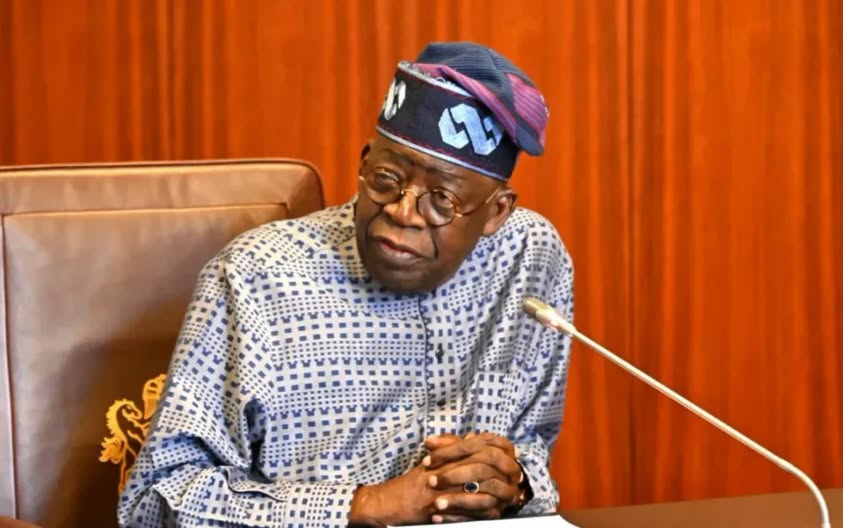
Chief Uche Nnaji, the Peoples Democratic Party (PDP) governorship candidate in Enugu State, has pledged to establish three major industries in the state within two years if he is elected governor in 2027. The industries would focus on coal processing, iron ore utilisation and cement production, and Nnaji says they would create jobs and reduce Enugu’s dependence on monthly federal allocations.
Nnaji made the pledge during a consultative campaign visit to Enugu indigenes living in Aba, Abia State, according to a statement issued by his media adviser, Mr Robert Ngwu, in Enugu. The News Agency of Nigeria (NAN) reported the pledge on Tuesday, 11 November 2026.
The promise is the latest instalment of an industrialisation pitch Nnaji has been making to Enugu voters and to Enugu communities outside the state since last week, when he unveiled the same three-sector plan to Igbo traders at the Alaba International Market in Lagos. There, he put figures on the ambition: more than $4 billion in foreign direct investment and over 50,000 direct and indirect jobs.
The three industries
At the centre of the plan is coal, the mineral that gave Enugu its nickname, the Coal City. Nnaji said his administration, if elected, would prioritise the local processing of coal rather than the current practice of digging it out and transporting it away in its raw form.
He identified Awhum, Nachi and the Nsukka axis as areas with coal and iron ore deposits that could support the proposed industrial projects. The point, as he put it in Lagos, is to maximise the value Enugu extracts from its own resources instead of watching the raw material leave the state with little benefit to the communities where it is mined.
The second industry is iron and steel. Nnaji proposed establishing an iron and steel industry to use iron ore deposits stretching from Nachi in Udi Local Government Area through Oji River and into parts of Nsukka. According to NAN, the project would support the local production of iron rods and other construction materials, cutting the cost of building materials that Enugu currently imports from outside the state.
The third is cement production. Nnaji said cement would also form part of his industrialisation agenda, although he acknowledged that the project would require further consideration. The state’s limestone and other mineral resources, he has argued, could support cement production and associated manufacturing.
Nnaji said the proposed industries would provide employment, strengthen the state’s productive capacity and improve its economic base. He also spoke about the economic challenges facing residents, including food affordability, security and the cost of doing business, and said his development agenda would seek to address those concerns through investment in productive sectors and better economic opportunities.
Coal, methanol and the value chain
The most detailed part of Nnaji’s pitch so far concerns what coal processing could actually produce. Speaking in Lagos, he argued that processing Enugu’s coal could yield methanol, a chemical used in industry, and that foreign companies would be willing to pay for five years of supply in advance once production begins.
The argument is that Enugu has spent decades sitting on a resource it barely processes. Coal mining in the area dates back more than a century, and the Iva Valley mine in Enugu was once the backbone of the region’s economy. Today, coal is still dug at places such as Awhum, but it leaves largely unprocessed. Nnaji’s case to voters is that the value of the mineral should be captured in Enugu, through processing plants and downstream industries, rather than exported raw.
He made the same point about iron ore. The deposits around Nachi, Oji River and Nsukka, he said, are in commercial quantities and could support a steel industry. Combined with cement, the three sectors would, in his telling, give Enugu an industrial base built on minerals the state already owns.
Whether the figures hold up is another matter. The $4 billion investment figure and the 50,000 jobs projection are Nnaji’s own estimates, made at campaign events rather than published in a costed policy document. No feasibility study, funding commitment or named investor has been attached to the plan in the reports so far, and the candidate has not yet said how the industries would be financed or where the plants would be sited beyond the mineral-bearing areas he named.
The Enugu community in Aba
The Aba visit was organised as a consultation with Enugu people living outside the state, and the reception Nnaji received there matters to his campaign. Welcoming him and other PDP candidates at the event, the chairman of the Enugu State Consultative Forum, Abia Chapter, Mr Sunday Okonkwo, pledged the support of Enugu indigenes living in Abia for the candidates.
Okonkwo said the forum, made up of sons, daughters and wives of Enugu indigenes living in Abia, considered itself a stakeholder in the political and developmental affairs of the state. He said the visit showed the importance of maintaining links between Enugu indigenes living outside the state and those at home, and that members of the forum were interested in the development of Enugu and would support candidates with practical solutions to the state’s challenges.
He identified unemployment, insecurity, poor roads and taxation as the issues requiring attention, and described Nnaji as a businessman and job creator, expressing confidence in his industrialisation agenda. Okonkwo assured the PDP candidates that members of the forum would mobilise support among their relatives and other Enugu indigenes ahead of the 2027 elections.
The Aba engagement follows a similar outing in Lagos, where Igbo traders and members of the Auto Spare Parts and Machinery Dealers Association hosted Nnaji at the Alaba International Market. The pattern is deliberate: Nnaji is courting Enugu’s large trading diaspora in Nigeria’s commercial cities, a constituency with money, networks and votes back home.
A campaign promise with a court case behind it
Nnaji’s candidacy carries a complication that his opponents have not stopped raising. He served as Minister of Innovation, Science and Technology from August 2023 until he resigned on 7 October 2025, following allegations that he forged the university degree and National Youth Service Corps (NYSC) certificates he submitted for his ministerial screening.
The NYSC disowned his certificate in court, and the Independent Corrupt Practices and Other Related Offences Commission (ICPC) charged him with a six-count offence including alleged certificate forgery and making false statements in documents submitted to public authorities. He was arraigned in July 2026 and pleaded not guilty to all the charges. In September 2026, a Federal High Court in Abuja granted him permission to travel abroad for medical treatment, and the trial continues.
Nnaji has consistently denied wrongdoing. He has said his resignation was not an admission of guilt but a principled decision to respect due process, and he has described the allegations as politically motivated attacks by opponents. He insists he graduated from the University of Nigeria, Nsukka, in 1985, and has gone to court seeking to compel the university to release his academic transcript. The matter remains before the courts, and none of the allegations against him has been decided by a court.
The certificate case is the reason Nnaji’s industrialisation pitch will face sharper scrutiny than an ordinary campaign promise. His opponents in the 2027 race, including the incumbent Governor Peter Mbah, who recently inaugurated 68 Development Centre administrators across the state and is seeking re-election on the platform of the All Progressives Congress (APC) after the APC campaign flag-off in Nsukka, are likely to ask whether a candidate fighting a forgery trial can be trusted with the state’s industrial future. Nnaji’s answer, so far, has been to keep talking about jobs and factories.
What to watch
The pledge raises questions that the campaign will have to answer in the weeks ahead. The first is money: attracting $4 billion in foreign investment into three new industries within two years would require investors, power supply, roads and a regulatory environment that Enugu does not yet have in place. The second is power: coal processing, steel and cement are all energy-hungry industries, and Enugu’s electricity supply remains unreliable.
The third is the candidate himself. Nnaji has also promised free shops for traders displaced by market demolitions in Enugu, a pledge he made in October, and he has framed his whole campaign around industrialisation. But until he publishes costings, timelines and named partners, the three-industry promise remains what it is: a campaign pledge, made to Enugu voters at home and abroad, that will be judged against the record of the man making it and the realities of governing the state.
For Enugu residents, the test will be whether the plan survives contact with the campaign. Nnaji has put a clear offer on the table: coal, iron ore and cement, three industries, two years, 50,000 jobs. The 2027 election will decide whether voters buy it.