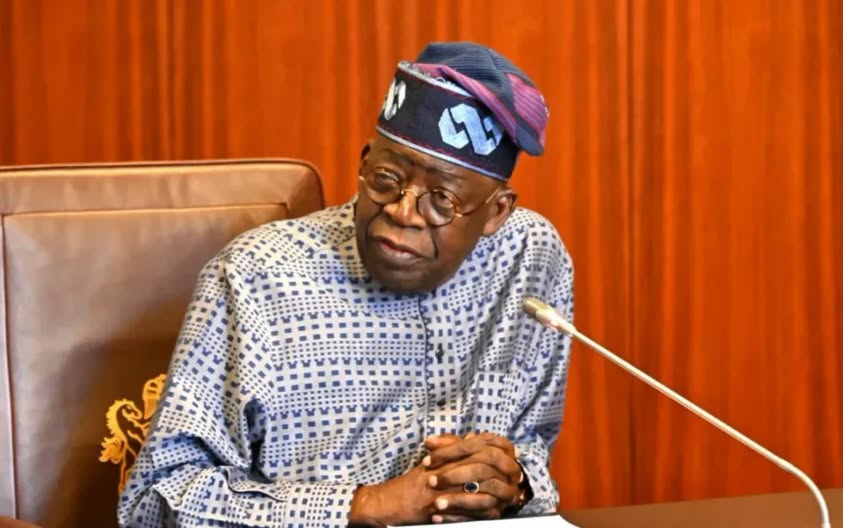
All 36 state Houses of Assembly in Nigeria have approved the constitutional amendment to establish state police, the National Assembly announced on Monday, November 16, 2026, clearing the last major hurdle before the bill is sent to President Bola Tinubu for assent.
The Clerk to the National Assembly, Kamoru Ogunlana, disclosed the unanimous endorsement in a statement issued on Monday, describing it as 100 per cent approval by the state legislatures. The approval exceeds the constitutional requirement of at least 24 state assemblies, or two-thirds of the 36 Houses of Assembly, under Section 9(2) of the 1999 Constitution, as amended.
“Following the completion of the verification process by my Office, the Bill is set for transmission to the President of the Federal Republic of Nigeria, for His Excellency’s assent,” Ogunlana said.
The bill, formally titled the Constitution of the Federal Republic of Nigeria, 1999 (Sixth Alteration) Bill, seeks to provide for the establishment of State Police Services and related matters. If the President assents to it, the Constitution will for the first time give states a legal framework to establish and run their own police services alongside the existing federal police structure.
From 28 to 36 in two weeks
The unanimous approval is the end of a rapid climb in the number of state assemblies backing the amendment. On November 3, the National Assembly announced that 28 state assemblies had approved the bill, already more than the 24 required by the Constitution. By Sunday, November 15, Senate Leader Opeyemi Bamidele said 32 assemblies had endorsed the proposal, with four still to communicate their decisions. On Monday, the Clerk confirmed that all 36 had now approved.
The National Assembly had given the outstanding assemblies time to conclude their consideration, and the Senate had set deadlines for the remaining states to send in their resolutions. The final four approvals arrived before the latest deadline, completing the process ahead of the transmission of the bill to the President.
Ogunlana said the bill had in fact satisfied all the constitutional and administrative requirements for transmission some time ago, but the leadership of the National Assembly deliberately held it back to allow for broader national consensus and engagement with all the states.
“It is important to note that the Bill had long satisfied all the constitutional and administrative requirements for transmission as prescribed by the Constitution and the Acts Authentication Act Cap. A2, Laws of the Federation of Nigeria, 2004, but the Leadership of the National Assembly directed a brief delay of transmission to allow for broader national consensus and engagement of all the States of the Federation,” he said.
He described the unanimous endorsement as an unprecedented demonstration of cooperation between the National Assembly and the state Houses of Assembly, and of constructive cooperation between the executive arms of government at the federal and state levels. He commended the 36 governors, the Speakers and members of the Houses of Assembly, and other stakeholders for their cooperation and commitment to policing reform.
What the bill would do
The proposed amendment is part of ongoing efforts to decentralise policing in Nigeria and strengthen the security architecture by giving the Constitution a clear basis for state police services.
Under the proposal, each state would be able to establish its own police service, with responsibility for security challenges within its own territory. The Nigeria Police Force would retain its national responsibilities, so the country would move from a single, centrally controlled police structure to a system in which federal and state police operate side by side.
Supporters of state police have argued for years that policing works best when it is close to the communities it serves. They say officers recruited from within a state, who know its terrain, its languages and its local flashpoints, can respond faster to crimes such as kidnapping, banditry and communal clashes than a force directed entirely from Abuja. They also argue that state governments, which already fund much of the logistics used by police formations in their states, should have a formal say in how policing is organised.
Critics have raised concerns that state governors could misuse a police force under their control, particularly against political opponents, and have questioned how states would fund, train and equip new police services without weakening the federal force. Others have asked how command and control would work where federal and state officers operate in the same area, and what safeguards would stop a state police service from becoming a political tool.
Those questions are not settled by the constitutional amendment itself. The bill creates the legal framework; the details of recruitment, funding, training, oversight and the relationship between state and federal commands would be set out in the laws each state passes and in further federal legislation after assent. That is why the debate over state police is likely to continue well beyond the President’s signature.
What it means for Enugu and Nsukka
Enugu State House of Assembly is among the 36 assemblies that approved the bill, so Enugu is now in line to establish its own police service once the amendment becomes law and the state passes its own enabling legislation.
The change matters for Enugu because the state has faced persistent security challenges in its rural communities, including kidnapping on farms and highways. In early November, kidnappers abducted a mother and her three sons from a cassava farm in Uzo-Uwani Local Government Area, in a case that drew attention to the vulnerability of farming communities in the state. Communities in Nsukka and across Enugu North have repeatedly called for stronger local security presence.
A state police service would give the Enugu State Government a direct instrument for policing its own communities, rather than relying entirely on federal police formations posted to the state. It would also place new responsibilities on the state, including paying, training and equipping officers, and setting up the oversight structures that critics say are essential if the new force is to earn public trust.
Governor Peter Mbah’s administration has already been investing in security in the state, and the approval of the bill opens a new phase in which the state government will have to decide how quickly to move, how large a state police service should be, and how it will be funded. Those decisions will be watched closely in Nsukka, where residents have felt the impact of insecurity directly.
Part of a wider security push
The state police bill is advancing at a time when the Federal Government is also moving on other security fronts. On Sunday, November 15, the Presidency announced a five-year defence plan to end insecurity, including the recruitment of 28,000 soldiers and 50,000 police officers, the creation of four new army divisions, and new military depots and barracks across the country.
Together, the two moves point to a government trying to widen the security net from both ends: more federal boots on the ground, and a constitutional opening for states to police themselves. Whether that combination reduces kidnapping, banditry and insurgency will depend on how the new structures are funded, staffed and supervised in practice.
What happens next
The next step is the formal transmission of the bill to President Tinubu for assent. Reports say the bill could reach the President as early as Friday, November 20, 2026. Once the President signs it, the amendment becomes part of the Constitution, and states can begin the process of establishing their police services under their own laws.
The Clerk said the achievement would also provide a foundation for the National Assembly to complete and transmit the other bills in the Sixth Constitution Alteration exercise to the state Houses of Assembly for their consideration as soon as possible.
For now, the legislative journey of the state police bill is effectively complete. What remains is the President’s decision, and then the harder work in the states: building police services that are professional, properly funded, accountable to the public, and genuinely able to make communities in places like Nsukka and Uzo-Uwani safer.