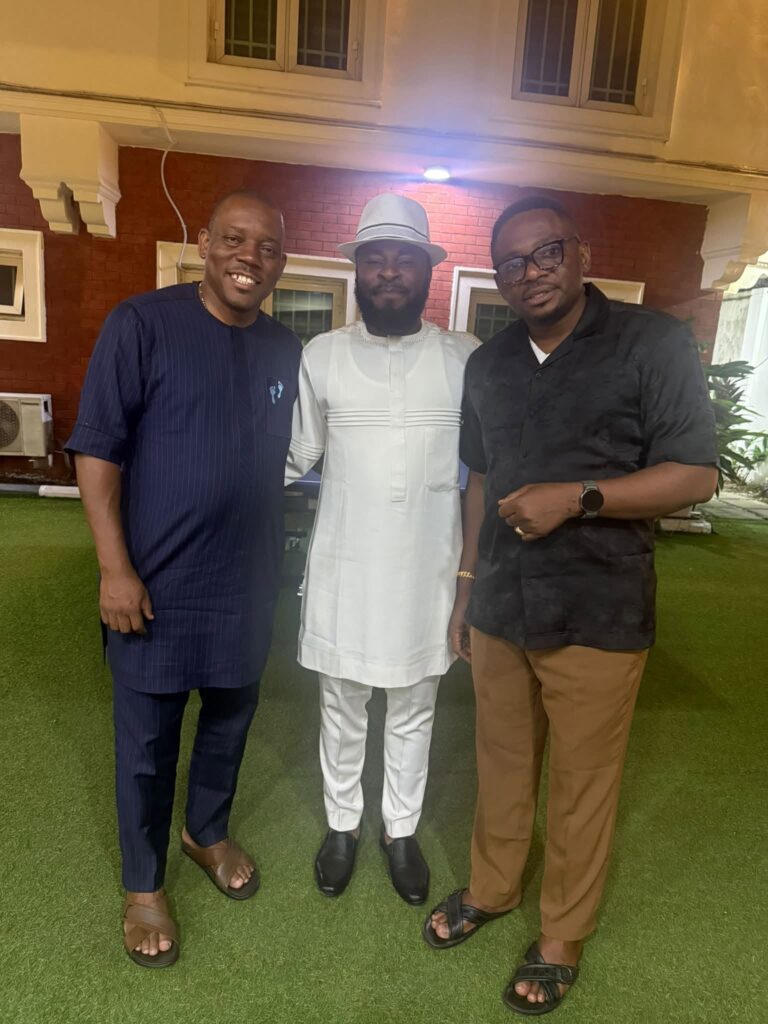
The General Overseer of the Redeemed Christian Church of God (RCCG), Pastor Enoch Adejare Adeboye, ordered the refund of billions of naira donated to church projects within 24 hours after the Economic and Financial Crimes Commission (EFCC) traced the money to alleged proceeds of financial crime, the chairman of the commission, Ola Olukoyede, has revealed.
Olukoyede made the disclosure in the early hours of Saturday, November 7, 2026, while addressing workers and ministers of the RCCG after the church’s monthly Holy Ghost Service at the Redemption City of God in Simawa, Ogun State, ahead of the church’s annual Holy Ghost Congress.
The EFCC chairman said Adeboye gave the order immediately after the commission briefed him on its findings, and he commended the cleric for what he described as an example of integrity and responsible leadership.
What the EFCC chairman told RCCG workers
According to Olukoyede, a member of the church had donated billions of naira towards an RCCG project, but investigations later revealed that the money was the proceeds of financial crime.
The individual at the centre of the matter was under investigation for alleged financial crimes, and Olukoyede said the person was involved in financial transactions worth tens of billions of naira, some of which the commission traced to the church.
The EFCC chairman said he personally approached Adeboye to explain the findings. He said the cleric reacted angrily on hearing that money linked to alleged crime had found its way into church projects, and immediately directed church officials to return the funds.
The disclosure was first reported by Church Times Nigeria, which said Adeboye had invited Olukoyede to address church workers on financial propriety and the need for churches to maintain transparent financial records. The programme, held at the invitation of Adeboye, had as its theme, “Ethical Standard and Corruption in Christian Community.”
The 24-hour order
Olukoyede told the gathering that Adeboye did not hesitate after he was briefed. Quoting the cleric, the EFCC chairman said Adeboye called one or two pastors and told them: “I give you 24 hours. Everything you have traced to RCCG from this particular person who has been indicted, return it within the next 24 hours.”
According to Olukoyede, the money was returned to the coffers of government. He said the swift response showed what the church stands for.
“That money was returned to the coffers of government. That is what RCCG is known for. That is who we are. We are not the custodian of proceeds of crime,” Olukoyede said, according to reports of the meeting.
The EFCC chairman did not disclose the identity of the donor, the specific RCCG project that received the money, or the exact amount involved. He said only that the donation ran into billions of naira, and that the wider transactions under investigation ran into tens of billions of naira.
A second church and the Ponzi warning
Olukoyede also used the meeting to recall a separate case involving another church which he said was allegedly implicated in a Ponzi scheme.
He said the leader of that church initially resisted the commission’s intervention, but eventually refunded a substantial amount after the EFCC threatened legal action. According to the EFCC chairman, individuals accused of fraud had operated an investment scheme through the church, resulting in billions of naira being lost by members.
The EFCC boss warned church leaders against accepting suspicious donations and urged religious institutions to keep transparent financial records. He said the Adeboye example showed how religious leaders should respond when they learn that money given to their institutions may have come from crime.
The warning adds to the commission’s recent enforcement actions against financial crime across the country, including its crackdown on illegal refining and other economic crimes.
Why Olukoyede was invited to Redemption City
The EFCC chairman addressed the RCCG workers at the invitation of Adeboye himself, in a session organised by the church ahead of its annual Holy Ghost Congress, one of the biggest gatherings on the Nigerian Christian calendar.
The theme of the session, “Ethical Standard and Corruption in Christian Community,” placed the discussion squarely on how churches handle money, and what leaders should do when donations turn out to have a criminal source.
Olukoyede’s message to the workers was that no institution, including a church, should keep money it knows, or later learns, came from crime. His account of Adeboye’s reaction was presented as the standard he wants other religious leaders to follow: ask questions about large donations, act immediately when the EFCC raises a concern, and return the money without delay.
The disclosure has drawn wide attention because Adeboye, 84, is one of the most influential religious leaders in Nigeria, and the RCCG is one of the largest Pentecostal churches in the world, with branches in about 198 nations as of 2017 and more than 14 million worshippers in Nigeria.
Adeboye and Nsukka: the UNN connection
The story also has a direct link to Nsukka. Adeboye began his university education at the University of Nigeria, Nsukka, before the Nigeria Civil War interrupted his studies and he completed his first degree in mathematics at the University of Ife, now Obafemi Awolowo University, graduating in 1967.
He went on to obtain a master’s degree in hydrodynamics from the University of Lagos in 1969 and a doctorate in applied mathematics from the same university in 1975, after a career as a mathematics lecturer.
Adeboye has kept a long relationship with the University of Nigeria, Nsukka. In 2011, he endowed a 50 million naira professorial chair in mathematics at the university, and in 2017 the university conferred on him an honorary doctorate. He has also endowed universities elsewhere in Nigeria, including Obafemi Awolowo University.
The university, which marked its 255th inaugural lecture in Nsukka this week, remains one of the institutions closest to the cleric’s own academic journey, and his endowment continues to support mathematics teaching and research there. The endowment sits alongside federal support for tertiary institutions, which the Federal Government has continued to expand.
What was not disclosed
For all the detail in Olukoyede’s account, several important facts remain undisclosed. The EFCC chairman did not name the donor, did not identify the RCCG project that received the donation, and did not state the exact amount that was refunded.
That means the public record, for now, rests on the EFCC chairman’s account of what happened: that billions of naira linked to a person under investigation were traced to RCCG projects, that Adeboye ordered the money returned within 24 hours, and that the funds went back to the government.
The donor remains described only as a person under investigation for alleged financial crimes. No charge or conviction in connection with this donation has been reported, and the allegation against the donor remains exactly that, an allegation, until the EFCC or a court says otherwise.
Why the disclosure matters
The episode matters for two reasons. First, it shows the EFCC tracing suspected proceeds of crime into religious institutions, a trail that anti-graft agencies in Nigeria have long said they watch. Second, it puts on record a case in which a major church, once alerted, returned the money quickly and in full, rather than contesting the commission’s findings.
For churches and other organisations that receive large donations, the message from the EFCC chairman was plain: know the source of the money you accept, keep records that can be checked, and when the source turns out to be criminal, return the money.
The disclosure comes at a time when the RCCG itself has been in the news over the use of photographs of its General Overseer. Adeboye clarified at the church’s November Thanksgiving Service on Sunday, November 1, 2026, that a photograph of him carrying a placard was taken during a prayer walk on February 2, 2020, and not during a protest against a former president. The church followed up with a statement urging journalists to verify photographs and establish their original contexts before publication.
Whether the EFCC will say more about the donor or the investigation remains to be seen. For now, the account stands as told by the commission’s chairman: a donation in billions, a trace to alleged crime, a 24-hour order from the pulpit’s highest office, and a refund to the government.