We Are Nsukka: Why This Land of One Blood Must Never Be Divided.
A personal reflection on unity, identity, and the politics of division in Enugu North
I remember the first time someone asked me, quite pointedly, “Are you really from Nsukka, or are you from Enugu-Ezike?” I paused, genuinely confused by the question. To me, it was like asking a man born in Lagos whether he was truly a Lagosian, or merely a resident of Ikeja. The question carried within it an assumption I had never considered, that being from Nsukka Cultural Zone somehow required narrowing yourself down to a single town, a single local government, a single fragment of a people who have shared one soil, one dialect, and one destiny for generations.
That conversation stayed with me. Because it wasn’t really a question about geography. It was a question planted by politics, a seed of division sown by those who understand something the rest of us often forget: a united people cannot be easily controlled.
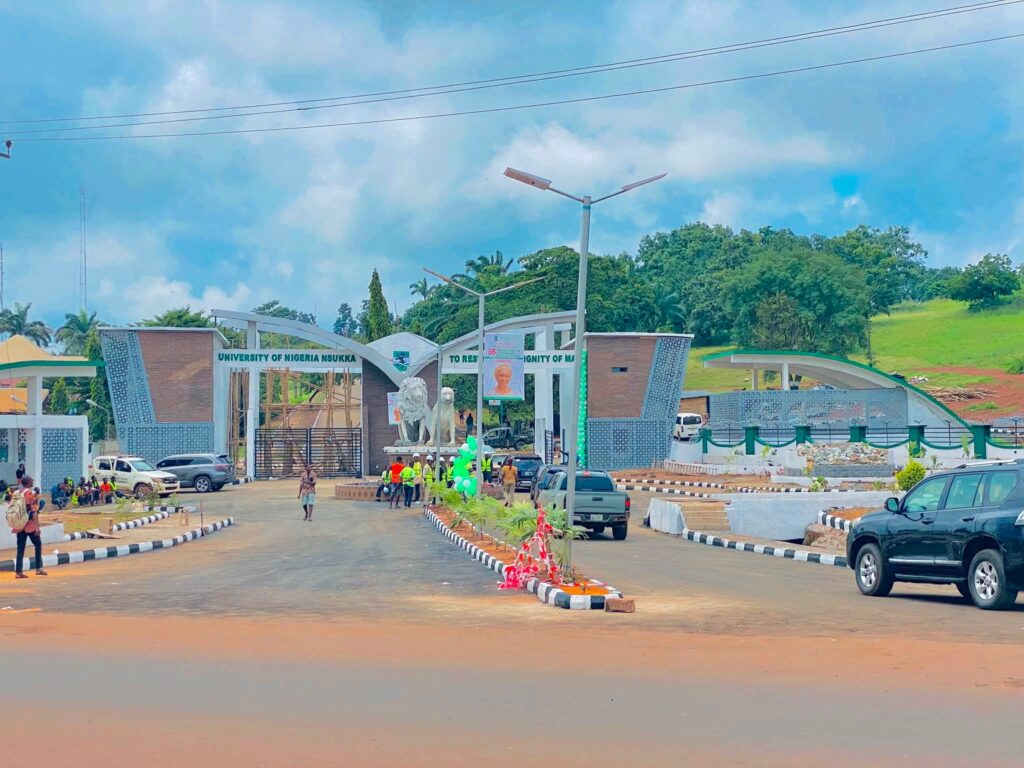
Nsukka Cultural Zone, recognized administratively as the Enugu North Senatorial District; is made up of six local government areas: Nsukka, Igbo-Etiti, Igbo Eze North, Igbo Eze South, Udenu, and Uzo-Uwani. Some scholarly accounts of the region extend the cultural boundary further still, to include Isi-Uzo, reflecting just how deeply intertwined this area’s traditions, dialect, and shared history truly are.
We speak variations of the same Igbo dialect. We share the same festivals, the same reverence for our ancestral customs, the same Onyishi institution of eldership that governs our communities. Whether a man’s compound sits in Enugu-Ezike, Aku, Obollo-Afor, or the town of Nsukka itself, he carries the same cultural DNA as his neighbour three local governments away. We are not six different peoples wearing a shared label for convenience. We are one people, expressed across six administrative boundaries — boundaries drawn not by our ancestors, but by colonial and post-independence mapmakers who needed lines on paper, never intending those lines to become walls in our hearts.
Yet somewhere along the way, those administrative lines have been weaponized. I have watched, with growing concern, as certain voices, some from within our own zone, have worked tirelessly to convince our people that “Nsukka” refers only to the town and local government that bears the name, while the rest of us are something else entirely. Something separate. Something lesser, perhaps, or at least other.
This is not an accident of language. It is a strategy.
Here is what those pushing this narrative do not want us to calculate: Nsukka Cultural Zone is not a marginal player in Enugu State politics. It is, by most accounts, the most populous zone in the state, home to a significant share of Enugu’s overall population , a demographic reality that, if fully mobilized as one political bloc, could determine the outcome of virtually any state-wide contest, from the governorship to seats in the National and State Assemblies.
A zone with numbers like ours, standing together, does not beg for political relevance. It commands it.
This is precisely why disunity serves certain interests so well. A fractured Nsukka, one that sees itself as Nsukka LGA versus Igbo-Etiti versus Udenu versus Igbo Eze North and South versus Uzo-Uwani, each pulling in a different direction, each suspicious of the other’s motives is an Nsukka that can be picked apart, negotiated with piecemeal, and ultimately outmaneuvered by smaller, more cohesive interests elsewhere in the state.
I do not say this to indict any single individual. I say it because the pattern is too consistent, too convenient, too politically useful to certain ambitions, to be dismissed as coincidence.
What troubles me most is not that this strategy of division exists, such strategies exist everywhere power is contested. What troubles me is how many of us have become willing instruments in our own political diminishment.
We repeat the divisive talking points at village meetings. We share them in WhatsApp groups. We nod along when a politician tells us that “those people” from another local government within our own zone do not truly understand “our” struggles, as though Udenu’s struggles and Nsukka’s struggles and Igbo-Etiti’s struggles are not, in truth, the same struggle wearing different addresses.
Every time we accept this framing, we hand a small piece of our collective power to those who benefit from our fragmentation. We do their work for them, for free, and often with great enthusiasm.
I am not naive enough to believe that six local government areas, each with its own local leadership, local grievances, and local ambitions, can be stitched together overnight into a single, unbroken political voice. Communities are complex. Interests genuinely differ on matters of local development, appointments, and representation.
But cultural unity does not require the erasure of local identity. A man can be proudly from Obollo-Afor, or Aku, or Nru, or Ede-Oballa, and still recognises that his ultimate political strength lies in standing shoulder to shoulder with his kinsmen across the entire Nsukka Cultural Zone when it matters, during elections, during the distribution of state resources, during the selection of who speaks for us at the highest levels of Enugu State governance.
Unity, in this sense, is not about forgetting where you are from. It is about remembering what you belong to.
I began this piece with a simple question someone once asked me: was I really from Nsukka? I have come to understand that the question itself was the trap. The moment we begin arguing over who is “really” Nsukka and who is merely adjacent to it, we have already lost something far more valuable than the argument itself, we have lost sight of the fact that our strength was never meant to be measured local government by local government, but zone by zone, people by people, voice by voice.
Nsukka Cultural Zone does not need permission to be powerful. It already is. The only question that remains is whether we will recognize that power in ourselves, or continue handing it away, one divisive conversation at a time, to those who understand, far better than we sometimes do, exactly what is at stake if we ever truly stood as one.
By Maduabuchi Idoko