By Maduabuchi Idoko
Recent criticisms directed at the member representing Nsukka/Igbo-Eze South Federal Constituency, Hon. Chidi Mark Obetta, over alleged constituency funds have continued to dominate political conversations. However, a careful understanding of Nigeria’s budget implementation process reveals that many of the allegations fail to distinguish between budget appropriation, fund release and project execution.
Constituency Projects Are Not Cash Allocations to Lawmakers
One of the claims being circulated is that every member of the House of Representatives received ₦1 billion as constituency funds in the 2025 budget. That narrative misrepresents how constituency projects are financed in Nigeria.
While the 2025 Appropriation Act made provisions for constituency projects across federal constituencies, those projects are funded and implemented through Ministries, Departments and Agencies (MDAs). The role of the MDAs includes procurement, contract awards, supervision and execution of the projects.
At no stage are the appropriated funds transferred into the personal accounts of members of the House of Representatives.
Budget Appropriation Does Not Mean Budget Release
Another important distinction often overlooked is that an appropriation does not automatically translate into the release of funds.
Reports on the implementation of the 2025 budget indicate that only about 30 per cent of the approved budget has so far been released to MDAs. As a result, contractors handling projects across the country are still seeking access to the released funds before work can proceed at full scale.
This explains why several constituency projects captured in the budget have yet to reach completion despite being duly appropriated.
Consequently, equating a budgetary provision of ₦1 billion for constituency projects with a direct payment of ₦1 billion to a lawmaker is inaccurate and creates a false impression of how the system operates.
Lobbying Also Plays a Role in Constituency Development
Beyond statutory budgetary provisions, many constituency projects emerge through sustained engagement with relevant government agencies.
Legislators often lobby ministries and other federal institutions to attract projects to their constituencies. This process differs significantly from the widely held misconception that lawmakers receive constituency funds directly for personal administration.
Understanding this distinction is essential to evaluating the performance of elected representatives fairly.
Obetta’s Engagement With Constituents
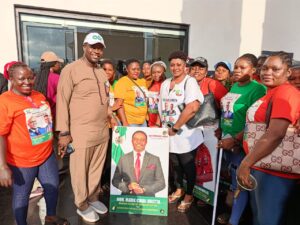
Amid the criticism, Hon. Chidi Mark Obetta’s engagement with his constituents remains part of his public record.
Since assuming office, the federal lawmaker has convened two town hall meetings, in 2023 and 2024, providing constituents with an opportunity to review his stewardship, discuss ongoing projects and raise concerns affecting the constituency.
Criticism Should Be Anchored on Facts
Holding elected officials accountable is a fundamental pillar of democracy, and public scrutiny should always be encouraged. However, accountability is best served when criticisms are based on verifiable facts rather than misconceptions about Nigeria’s budgeting and project implementation process.
Debates over constituency projects should therefore distinguish between budget appropriation, release of funds and actual project execution. Failure to make these distinctions risks misleading the public and shifting attention away from genuine issues of governance and development